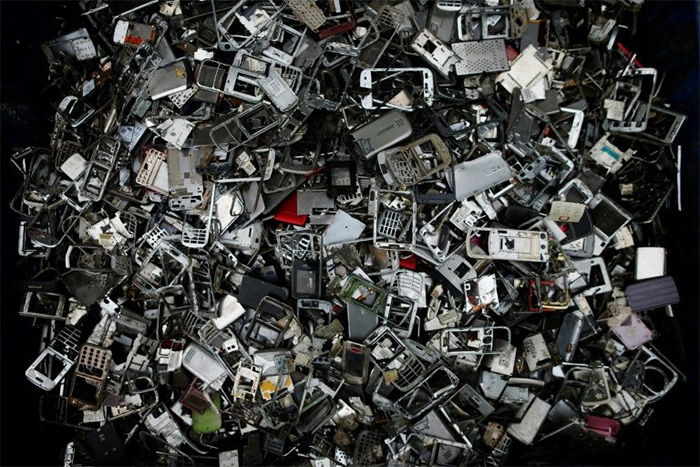
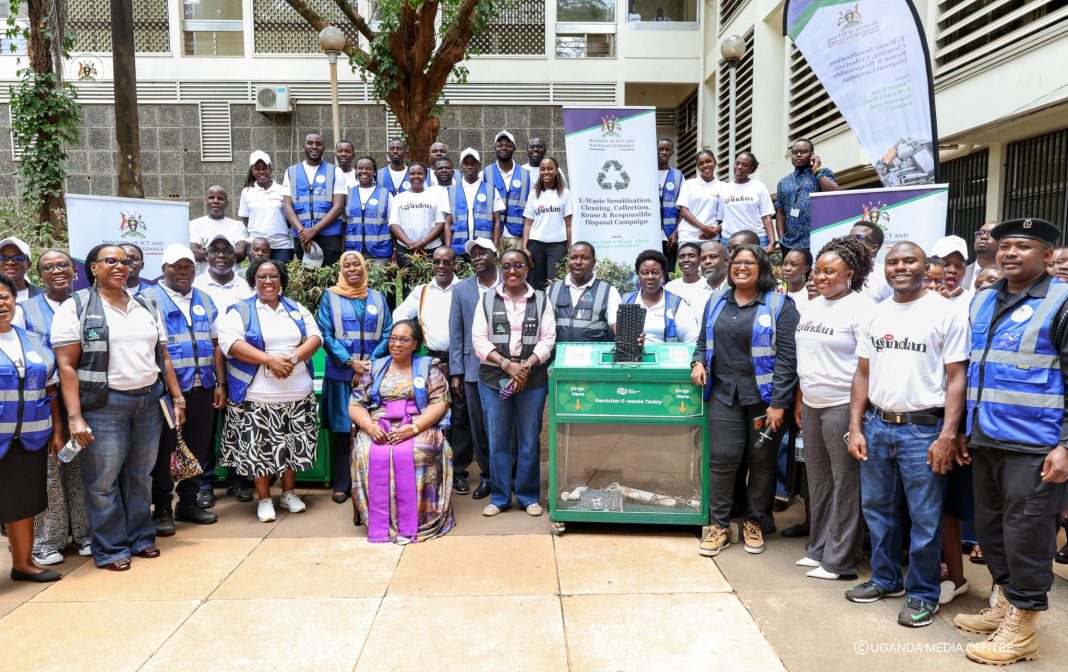
Uganda has launched an electronic-waste awareness and collection campaign aimed at encouraging the public to properly manage discarded phones, computers, chargers, batteries and other electronic equipment instead of treating them as ordinary household waste.
The E-Waste Sensitization, Cleaning, Collection, Reuse and Responsible Disposal Campaign, launched by the Ministry of ICT and National Guidance, will be conducted every last Friday of the month alongside the National Cleaning Day. The initiative is intended to promote responsible e-waste management and encourage citizens to take practical action for a cleaner environment.
Permanent Secretary in the Ministry of ICT and National Guidance, Dr Aminah Zawedde, said electronic waste management requires responsible handling because discarded devices can contain materials that pose risks when improperly managed.
“Today’s exercise focuses on an area directly connected to our work: the responsible management of electronic waste,” Zawedde said during the campaign.
The campaign comes amid concerns over Uganda’s limited formal collection and recycling of electronic waste. Uganda’s National State of the Environment Report 2024 estimates that the country generates about 41 million kilograms of e-waste annually, while only approximately 0.2 million kilograms is formally collected and recycled.
Electronic waste includes obsolete or unwanted electrical and electronic equipment and its components. Uganda’s National Environment (Waste Management) Regulations, 2020 specifically prohibit the disposal of electrical and electronic waste in landfills or unauthorised places. The regulations also provide for product stewards, including importers, distributors and sellers, to receive e-waste arising from products they handle.
The regulations further allow local governments to establish e-waste collection centres and require collected electronic waste to be secured and handled in ways that do not harm human health or the environment.
The Ministry’s campaign therefore places emphasis on collection, reuse and responsible disposal rather than indiscriminate dumping or burning. The Ministry has also been developing practical approaches to e-waste management. In April 2026, it reported a pilot ICT e-waste collection project involving the Uganda Communications Commission, including efforts to strengthen repair, refurbishment, collection and recycling systems.
The health implications of poor e-waste management extend beyond pollution. The World Health Organization says e-waste can contain hazardous substances such as lead, mercury and cadmium. Unsafe practices such as open burning, heating and informal dismantling can contaminate air, soil and water. Children are particularly vulnerable to exposure.
Globally, 62 million tonnes of e-waste were generated in 2022, but only 22.3% was documented as formally collected and recycled, according to WHO and the Global E-waste Statistics Partnership.
The monthly campaign is expected to provide an opportunity for government institutions, businesses and communities to improve awareness and participation in proper e-waste collection. Citizens are encouraged to avoid burning or dumping unwanted electronics and instead use designated or authorised collection and recycling channels.
As Uganda expands access to digital technologies, the Ministry says responsible management of the equipment reaching the end of its useful life will remain important for protecting both the environment and public health.